


- Company News
- Industry News
- Common Problem
Company News
What factors are related to the micro motion wear of needle roller bearings
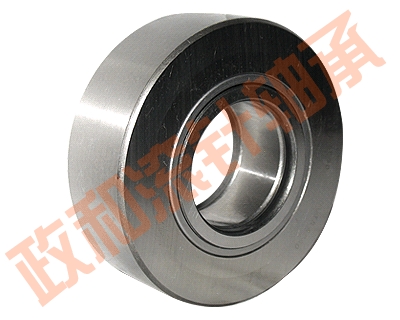
Micro motion wear of needle roller bearings is a surface damage phenomenon caused by small reciprocating sliding between contact surfaces, which is closely related to the following factors:
1. Contact load and stress distribution
The linear contact characteristics of needle roller bearings result in high Hertz contact stress in the contact area. When the external load is too large or unevenly distributed, the contact surface is prone to plastic deformation, accelerating micro motion wear. Under cyclic loading, stress concentration areas can trigger fatigue crack initiation, and crack propagation further exacerbates material delamination.
2. Lubrication conditions
Insufficient lubrication is the main cause of micro motion wear. If the thickness of the oil film cannot isolate the contact surface, direct metal contact can cause adhesive wear. The selection of lubricants is also crucial: low viscosity oils are easily squeezed out of the contact area, while lubricants containing extreme pressure additives can reduce friction through chemical reaction films. Insufficient stability of grease lubrication may exacerbate lubrication failure.
3. Material characteristics and surface treatment
The hardness and toughness of bearing materials need to be balanced: high hardness materials (such as GCr15 steel) have strong resistance to plastic deformation, but brittleness may promote crack propagation. Surface modification techniques such as nitriding and DLC coating can increase surface hardness to over 1200HV while reducing friction coefficient to below 0.1. Surface roughness is controlled at Ra 0.2μ Below m can reduce stress concentration.
4. Coordination accuracy and assembly quality
The interference fit causes installation stress, which may cause the micro motion amplitude to exceed the critical value (usually 10-100 m). Research has shown that when the clearance exceeds 5 μ m, the relative slip of the contact surface increases by more than 30%. The difference in thermal expansion coefficient can cause a variation of 0.01mm in the fitting gap when the temperature fluctuates by 20 ℃.
5. Environmental and working conditions
When the humidity is greater than 60%, the synergistic effect of corrosion and wear increases the wear rate by 2-3 times. Dust pollution causes three body wear, and hard particles (such as SiO2) can increase the wear amount by 5 times. When the temperature exceeds 120 ℃, the material undergoes tempering softening, resulting in a 20% decrease in hardness.
6. Vibration characteristics
When the external vibration frequency resonates with the natural frequency of the system, the amplitude of micro motion significantly increases. Experiments have shown that vibrations within the frequency range of 50-200Hz are prone to induce micro motion wear. Insufficient system stiffness can cause the amplitude amplification factor to exceed three times.
Conclusion
Micro motion wear is the result of multiple coupled factors. In practical engineering, it is necessary to optimize the contact stress distribution through finite element analysis, using surface texturing (such as micro pit density of 10 ^ 4/mm²); )By using solid lubrication and controlling the fitting tolerance to IT5 level accuracy, the wear rate can be effectively reduced by more than 70%.