


- Company News
- Industry News
- Common Problem
Company News
The function of needle roller bearings in combination with lubricating oil
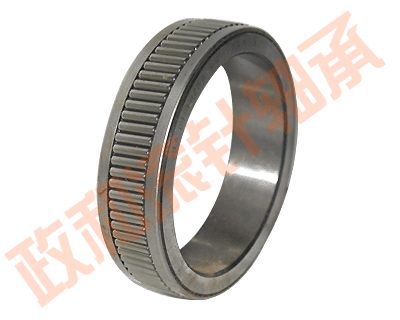
The coordination between needle roller bearings and lubricating oil is a key factor in ensuring their stable operation. Needle roller bearings use slender cylindrical needle rollers as rolling elements, with high load-bearing capacity and compact structural design. They are widely used in space limited and radial heavy load bearing applications, such as automotive gearboxes, industrial gearboxes, etc. However, the force characteristics of its line contact also lead to concentrated contact stress, which is extremely sensitive to lubrication conditions. Lubricating oil significantly improves bearing performance and prolongs service life through multiple mechanisms of action during this process.
Firstly, the function of lubricating oil is to form a stable lubricating film, isolating the direct metal contact between the needle roller and the raceway. During high-speed operation of bearings, lubricating oil is brought into the contact area, forming an extremely thin oil film through fluid dynamic pressure effect or elastohydrodynamic lubrication (EHL). This oil film can effectively reduce the friction coefficient, minimize energy loss and surface wear caused by sliding friction, especially during the start stop phase or impact load. The anti-wear additives in the boundary lubricant can further adsorb onto the metal surface to prevent micro convex body adhesion wear.
Secondly, lubricating oil serves as a heat dissipation medium. When needle roller bearings operate under high loads, internal friction and plastic deformation generate a large amount of heat. Lubricating oil takes away heat from the contact area through circulating flow and dissipates it through the bearing seat or external cooling system, avoiding material degradation and lubrication failure caused by excessive temperature rise. In addition, the viscosity characteristics of lubricating oil need to be matched with the working conditions: too high viscosity will increase resistance and exacerbate temperature rise, while too low viscosity cannot maintain sufficient oil film thickness, which may cause boundary lubrication or even dry friction.
Furthermore, lubricating oil has anti-corrosion and cleaning functions. Bearings are susceptible to moisture, acidic substances, or abrasive particles invading in humid or dusty environments. Anti rust additives in lubricating oil can form a protective layer on the metal surface, blocking oxidation reactions. At the same time, the flowing lubricating oil can wash away metal debris or external pollutants generated by wear inside the bearing, preventing their accumulation and causing secondary wear. Some lubricating oils also contain extreme pressure additives, which undergo chemical reactions under pressure to form anti shear protective films, enhancing the durability of bearings under heavy and impact loads.
In addition, the selection of lubricating oil should comprehensively consider the working temperature, speed, load type, and environmental conditions. For example, high-temperature conditions require the use of synthetic base oil and additives, while frequent start stop applications require attention to the anti emulsification and oil film retention ability of lubricating oil. Reasonable lubrication design (such as oil bath lubrication, circulating oil system, or oil air lubrication) can ensure that the lubricating oil continuously covers the contact area, while optimizing the sealing structure to prevent leakage and contamination.
In summary, the synergistic effect of lubricating oil and needle roller bearings not only reduces friction and wear, controls operating temperature, but also improves system reliability through chemical protection and physical cleaning mechanisms. This coordination relationship directly determines the load capacity, efficiency, and service life of the bearing, and is a key link that cannot be ignored in the design of mechanical transmission systems.