


- Company News
- Industry News
- Common Problem
Company News
Analysis and elimination methods of common faults in needle roller bearings
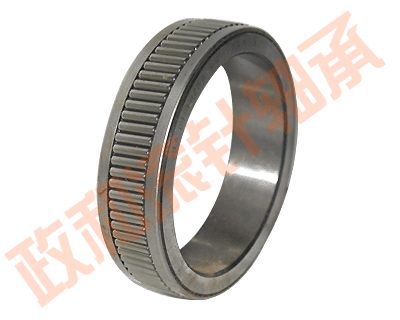
Analysis and elimination methods of common faults in needle roller bearings
Needle roller bearings are widely used in mechanical transmission systems due to their high load-bearing capacity and compact structure. However, improper use or maintenance can easily cause the following typical faults:
1、 Common faults and causes
1. Surface wear and peeling**
The main manifestation is pitting, peeling or scratching on the surface of the raceway or needle roller, which is often caused by insufficient lubrication, impurity invasion or overload. Long term poor lubrication can accelerate direct friction between metals, leading to fatigue peeling; Hard particles (such as metal shavings and dust) entering the interior of the bearing can scratch the working surface.
2. * * Abnormal temperature rise and jamming**
Abnormal increase in bearing temperature or rotational lag is usually caused by grease failure, tight installation, or insufficient axial/radial clearance. High temperature will accelerate the oxidation of lubricants, form gum to block the raceway, and further intensify friction.
3. * * Holder fracture**
The deformation or fracture of the retaining frame is often caused by impact loads, installation eccentricity, or centrifugal force during high-speed operation. Plastic retainers are prone to softening at high temperatures, while metal retainers may fail due to fatigue crack propagation.
4. Corrosion and electrocorrosion**
Wet environments or corrosive media invasion can cause surface corrosion; If there is leakage current in the equipment (such as poor grounding of the motor), the current passing through the bearing will generate pitting and damage the surface smoothness.
2、 Troubleshooting and preventive measures
1. * * Optimize lubrication management**
Choose high viscosity index lubricating oil or high-temperature resistant lubricating grease according to the working conditions, regularly clean and replenish lubricants. It is recommended to use oil mist lubrication or circulating oil system in heavy-duty or high-speed scenarios, and install sealing devices to prevent dust.
2. * * Standardized installation and alignment**
Use hydraulic tools to press fit bearings and avoid direct tapping. After installation, check the concentricity between the shaft and the seat hole (with a deviation of 0.02mm), calibrate the transmission components using a laser alignment instrument to ensure even load distribution.
3. * * Load and speed adaptation**
Select the bearing model through dynamic load calculation to avoid long-term operation exceeding the fixed load by more than 10%. High speed working conditions (DN value>500000) require the use of lightweight retaining frame design and temperature rise control not exceeding 90 ℃.
4. Environmental protection upgrade**
In humid or corrosive environments, stainless steel bearings or surface coatings (such as galvanized or DLC coatings) are preferred. Equipment with current risk requires the installation of insulated bearings or bypass conductive devices.
Summary: The reliability of needle roller bearings depends on systematic management of design selection, installation accuracy, and maintenance cycles. It is recommended to conduct status monitoring every 2000 hours of operation (vibration value of 4.5mm/s is normal), combined with ferrography analysis to predict faults in advance, which can extend the service life by more than 30%.
- Previous:Precautions during the assembly process of needle roller bearings
- Next:Already the last article