



- Company News
- Industry News
- Common Problem
Company News
Precautions during the assembly process of needle roller bearings
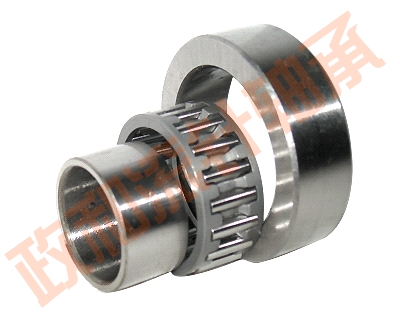
Precautions during the assembly process of needle roller bearings
Needle roller bearings are widely used in mechanical transmission systems due to their compact structure and strong load-bearing capacity. To ensure assembly quality and bearing life, the following key points need to be noted:
1. * * Preparation before assembly**
-Clean environment: The assembly area should be kept dust-free and free of impurities to prevent pollutants from entering the interior of the bearings. The surface of the bearing seat hole and journal should be wiped with a cleaning agent to ensure that there is no oil, rust or burrs.
-Check the components: Confirm that the dimensional tolerances of the bearings, shafts, and bearing seats meet the design requirements, measure the fit tolerance (interference or clearance fit) between the hole diameter and the shaft diameter, and avoid assembly stress or looseness caused by dimensional deviations.
-Lubrication preparation: Select appropriate lubricating grease or oil according to the working conditions, evenly apply it to the surface of the needle roller and the retainer, and reduce initial friction.
2. Assembly process control**
-Alignment and pressurization: Needle roller bearings are sensitive to eccentricity, and strict alignment between the shaft and bearing seat must be ensured during assembly. Use installation tools (such as hydraulic presses or sleeves) to evenly apply pressure, and do not directly strike the bearing end face to avoid tilting the needle rollers or deformation of the cage.
-Temperature control: If interference fit is used, hot fitting can be carried out by heating the bearing seat (usually not exceeding 120 ℃) or cooling the shaft to avoid local overheating and material annealing.
-Direction confirmation: Pay attention to the installation direction of the bearing seal or retaining edge. The side with the sealing ring should face the pollution source to avoid reverse installation and lubrication failure.
3. * * Inspection and adjustment after assembly**
-Clearance detection: After assembly, axial and radial clearances need to be measured to ensure compliance with standard values (such as C0/C2/C3 grades). A small clearance can easily lead to temperature rise, while a large clearance can affect transmission accuracy.
-Operation test: Manually rotate the bearing to check for any jamming or abnormal noise. Run it at low speed without load for 10-15 minutes and monitor the temperature rise (normally within 30 ℃ below the ambient temperature).
-Anti loosening measures: For bearings with axial positioning, they should be reliably fixed with snap springs, end caps, or threaded fasteners, and the pre tightening force should be checked regularly for attenuation.
4. * * Special working condition handling**
-When installing multiple bearings in series, it is necessary to ensure the coaxiality of each bearing to avoid uneven load distribution.
-In high-speed or heavy-duty scenarios, it is recommended to use a pre tensioned structure to improve rigidity while enhancing lubrication and heat dissipation.
Summary: The assembly quality of needle roller bearings directly affects equipment reliability. It is necessary to strictly follow the process specifications, focus on cleanliness, neutrality, and clearance control, and regularly maintain the lubrication system to extend its service life.