


- Company News
- Industry News
- Common Problem
Company News
How to detect needle roller bearing vibration to increase service life
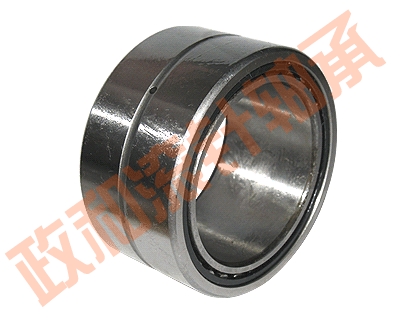
Vibration detection and life extension method for needle roller bearings
1、 Vibration detection technology
1. Sensor installation: Three axis acceleration sensors are used, preferably installed in the radial bearing direction of the bearing seat to ensure a smooth contact surface between the sensor and the substrate.
2. Monitoring parameters:
-Acceleration value (5-10kHz): high-frequency impact signal
-Effective value of vibration velocity (10-1000Hz): Evaluating overall vibration intensity
-Peak to peak displacement: monitoring low-frequency oscillation
3. Spectrum analysis: Focus on characteristic frequencies (pass frequency of the holder, rotation frequency of the rolling needle), and indicate faults when sidebands or harmonic components appear.
2、 Vibration data analysis
1. Establish benchmark value: The no-load vibration speed of the new bearing should be 1.8mm/s (ISO 10816 standard)
2. Deterioration judgment:
-When the vibration value exceeds the reference value by 200%, a warning is required
-The frequency amplitude of the cage increases by three times, indicating abnormal lubrication
-The appearance of 1/2 harmonic indicates installation eccentricity
3、 Life extension measures
1. Lubrication optimization:
-Control the grease filling amount within 25-30% of the bearing space
-Select PAO base oil and molybdenum disulfide additive for high temperature conditions
2. Installation control:
-Axis/hole fit tolerance maintained at H7/h6
-Install with hydraulic tools to ensure a fit of 0.02mm
3. Pre tightening force adjustment: The axial clearance should be controlled at 0.05-0.15mm, as excessive clearance can cause impact vibration
4. Surface treatment: Ion nitriding treatment is carried out on the raceway (hardness≥ 700HV)
5. Maintenance strategy:
-Add 5-8% lubricating grease every 500 hours to the chamber volume
-Arrange for dismantling inspection when the vibration value increases by 10% for three consecutive tests
By analyzing the correlation between vibration characteristic spectra and operating parameters, failure can be predicted 30% ahead of the life cycle, and with maintenance, the MTBF of needle roller bearings can be increased by 40-60%. The key is to establish a database of bearing vibration characteristics and achieve intelligent decision-making for condition based maintenance.